
Door initdesk TeamKlantenservice
Waarom omnichannel support een nette e-mailinbox verslaat
Alleen e-mail past niet meer bij hoe klanten contact opnemen. Hier is waarom een help desk die Telegram en e-mail in één gedeelde inbox afhandelt wint, en welke teams er het meest bij profiteren.
Een nette e-mailwachtrij voelt als goede support. Het is rustig, het is doorzoekbaar en het is het kanaal waarvoor de meeste help desks zijn gebouwd. Het probleem is dat het niet meer de plek is waar veel van je klanten zich daadwerkelijk bevinden.
Telegram passeerde recent 1 miljard maandelijkse actieve gebruikers. Voor een groeiend segment van bedrijven zoals creators, founders van digitale producten, en fintech- en web3-teams begint een aanzienlijk deel van klantgesprekken nu in een chatapp, niet in een inbox. Wanneer die berichten in een persoonlijk Telegram-account op iemands telefoon leven, zijn ze onzichtbaar voor de rest van het team, onmogelijk te taggen en weg zodra die persoon met vakantie gaat.
Dit is de kloof die een omnichannel help desk dicht. Het vervangt e-mail niet. Het trekt elk kanaal dat je klanten gebruiken naar één gedeelde plek.
Het echte voordeel is niet "meer kanalen"
Het is verleidelijk om te denken dat omnichannel alleen betekent dat je in meer apps bereikbaar bent. De werkelijke winst is dat context niet meer gevangen zit in een kanaal.
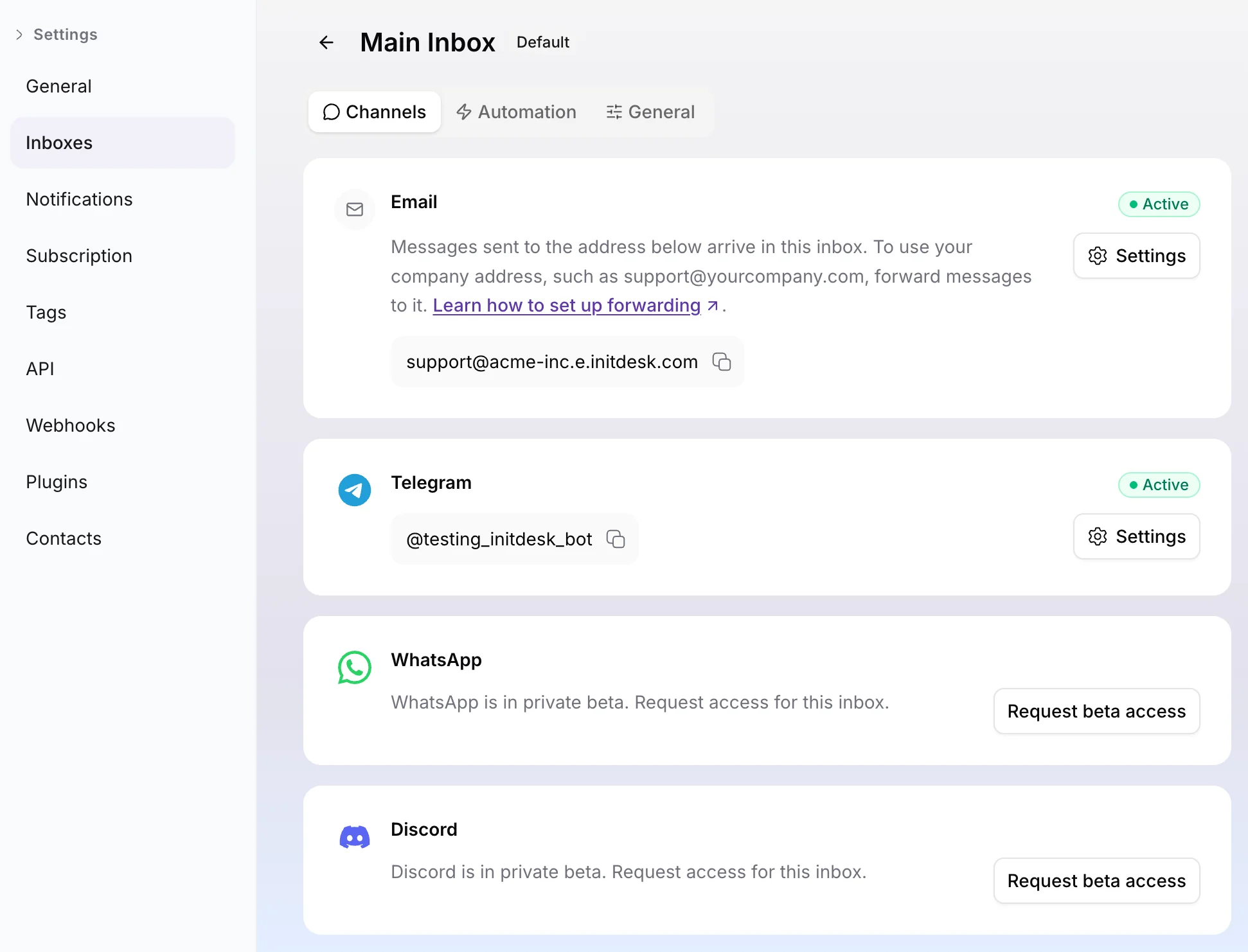
Wanneer e-mail en Telegram in dezelfde inbox landen, is een klant die je maandag mailde en donderdag via Telegram berichtte één persoon met één geschiedenis, niet twee losse threads die twee verschillende teamgenoten met twee verschillende antwoorden beantwoorden. Je team antwoordt met dezelfde tags, interne notities, AI-concepten en klantgeschiedenis, ongeacht waar het bericht vandaan kwam. De klant kiest het kanaal dat hij prefereert; je team hoeft er nooit over na te denken.
Die ene verandering drijft de voordelen waar supportleiders echt om geven:
- Snellere, consistentere antwoorden, omdat niemand over een telefoon, een desktop-app en een inbox hoeft te jagen om een gesprek samen te stellen.
- Niets glipt door de mazen, omdat er geen privé zijkanalen zijn die alleen één persoon kan zien.
- Lagere frictie voor de klant, die antwoordt in de app die hij al open heeft in plaats van een formele e-mail te schrijven.
De pijn die het oplost: support verspreid over apps
De meeste kleine teams falen niet in support omdat ze lui zijn. Ze falen omdat het gesprek gefragmenteerd is.
Een founder beantwoordt 's avonds Telegram-DM's vanuit een persoonlijk account. Een contractor handelt overdag de gedeelde e-mailinbox af. Niemand ziet wat de ander beloofde. Een bug die in een Telegram-groep wordt gemeld wordt nooit een ticket. Een waardevolle klant stelt dezelfde vraag twee keer en krijgt twee verschillende antwoorden. De toon drijft af, follow-ups vallen weg en het team voelt zich druk zonder controle te hebben.
Omnichannel support verwijdert de verspreiding. Eén wachtrij, één geschiedenis, één bron van waarheid, zodat het team klein kan blijven en er toch georganiseerd uitziet.
Wie profiteert het meest
Omnichannel met Telegram is niet voor iedereen even veel waard. Dit zijn de teams waar het de dagelijkse workflow het meest verandert.
1. Creators en info-productverkopers. Als je cursussen, communities, nieuwsbrieven of digitale producten verkoopt, praat je publiek al met je op Telegram, vaak in groepen en DM's. Die berichten behandelen als echte supporttickets, in plaats van meldingen die je uiteindelijk vergeet, beschermt je reputatie en je verlengingen.
2. Multi-product- en multi-brand-founders. Wanneer je meerdere apps, side projects of webshops runt, trekt elk klanten aan op een ander kanaal. Een gedeelde inbox die e-mail en Telegram combineert laat één persoon geloofwaardig support voor alles afhandelen.
3. Fintech-, crypto- en web3-teams. Telegram is de standaard thuisbasis voor deze communities. Klanten verwachten je daar te bereiken, snel, en beoordelen vertrouwen op hoe snel en duidelijk je reageert. Alleen-e-mail support voelt traag en gedateerd.
4. Regionale en community-gedreven bedrijven. In Latijns-Amerika, Europa en veel van Azië zijn chatapps de normale manier om zaken te doen, niet e-mail. Als je klanten op Telegram leven, voegt "open een ticket via e-mail" frictie toe die je niet nodig hebt.
Eén inbox, meer dan één Telegram
De grootste unlock voor deze teams is het koppelen van meer dan één Telegram-account aan dezelfde inbox.
Een creator heeft misschien een Telegram-aanwezigheid voor hun cursus, een andere voor een betaalde community en nog een voor een nieuwe launch. Een multi-brand founder runt misschien een apart Telegram per product. Zonder omnichannel help desk betekent dat jongleren met meerdere telefoons of logins en bidden dat niets wordt gemist.
Met alles gerouteerd naar één gedeelde inbox worden die aparte Telegram-accounts gewoon meer kanalen in dezelfde wachtrij. Het team triaget ze samen, past dezelfde tags en routing toe en houdt één schoon overzicht van elke klant, ongeacht welk merk, product of account ze berichtten. Je schaalt je aanwezigheid zonder je tools te vermenigvuldigen.
Koppel je Telegram aan je supportinbox en stop met klanten beantwoorden vanuit een persoonlijk account dat niemand anders kan zien. Zie the Telegram channel launch om het in een paar minuten in te stellen.
E-mail is de basis, niet het plafond
E-mail verdwijnt niet. Het is het betrouwbare ruggengraat van klantenservice. Maar het is de basis van wat klanten nu verwachten, niet het plafond. De teams die zich in 2026 rustig en responsief voelen, zijn degenen die klanten ontmoeten op de kanalen die ze al gebruiken, terwijl ze één georganiseerde plek houden om te antwoorden.
We hebben onlangs native Telegram in initdesk-inboxen gebracht om precies deze reden. Zie the Telegram channel launch voor hoe het in de praktijk werkt, of zeg hallo op X @initdeskhq om ervaringen te vergelijken over omnichannel support met een klein team.